Today is International Mother Language Day – a wonderful opportunity to take a closer look at Kiswahili, the official language of Tanzania.
Anyone who has ever searched for “thank you in Tanzania” was probably trying to find out how to express gratitude there. But before we come to the word itself, it helps to understand the language behind it. In Tanzania, language is far more than translation – it is identity, connection, and lived culture.
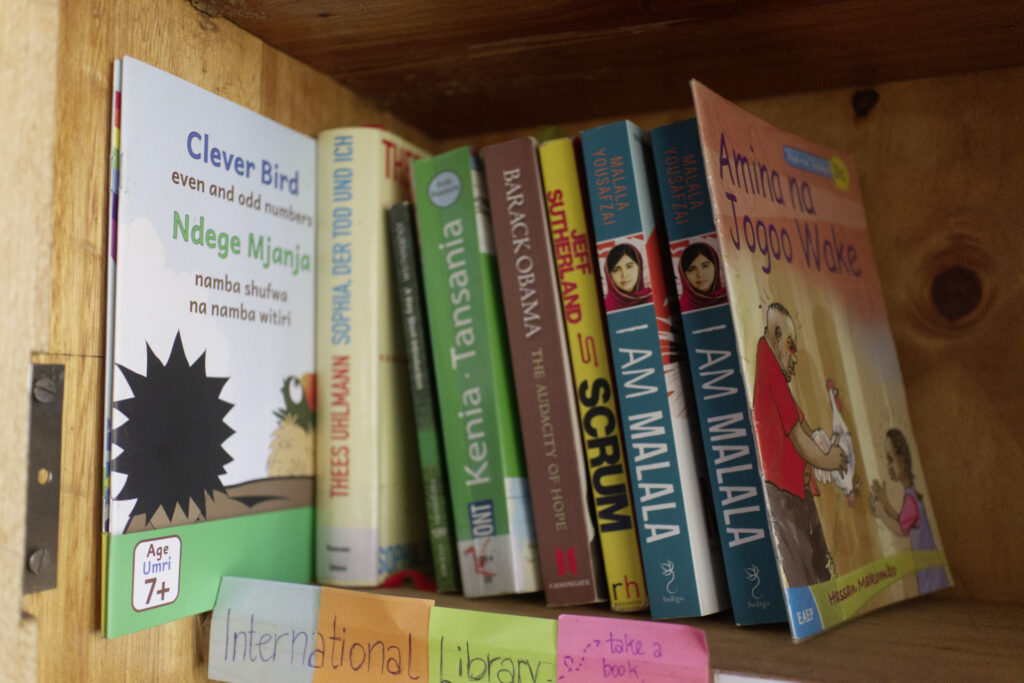
In Tanzania, Swahili – more precisely Kiswahili – is spoken as the national and common language. You hear it in the streets, on the bus, at the market, and in everyday conversations between people from very different backgrounds. Although Tanzania is home to more than 120 ethnic groups with their own languages, Kiswahili connects them all.
Kiswahili did not emerge “overnight.” It developed over centuries along the East African coast. Its foundation lies in African Bantu languages. Through trade and encounters with people from Arabia, Persia, and later Europe, new words and influences were naturally integrated. That is why Kiswahili feels deeply African while at the same time surprisingly familiar in certain expressions.
Today, Kiswahili is spoken not only in Tanzania, but also in Kenya, Uganda, the Democratic Republic of Congo, Rwanda, Burundi, and other countries in East and Central Africa. More than 100 million people use the language, making it one of the most widely spoken languages on the continent.
Anyone who begins learning Kiswahili quickly notices how central politeness and greetings are. Conversations often start with genuine interest in the other person. Getting straight to the point can feel unusual – or even impolite – in many situations.
A well-known proverb captures this mindset beautifully:
“Haraka haraka haina baraka.”
Rushing brings no blessing.
And that brings us back to gratitude.
In Swahili-speaking cultures, saying “thank you” is not just a polite phrase, but an expression of respect and connection. Another proverb reflects this:
“Asante haigharimu kitu.”
Saying thank you costs nothing.
So how do you actually say “thank you” in Tanzania?
Very simply: Asante.
A small word – with great impact.
Especially in our work, which is built on partnership, encounter, and mutual learning, language is more than a tool. It is a sign of respect. Even a simple “Asante” can build bridges. Perhaps International Mother Language Day is a good moment to remind ourselves how valuable linguistic diversity truly is – and how much connection can be found in a single word.